


The QPAC team has moved into live video production, reaching people unable to experience performances on-site, and is now upgrading to 4K HDR infrastructure using AJA devices.
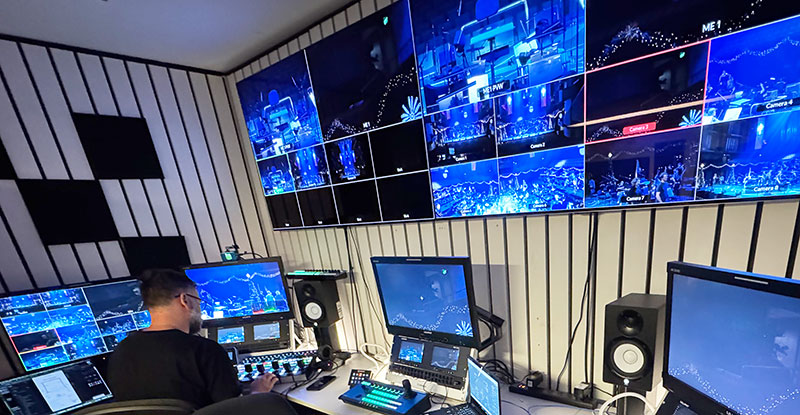
The team at the Queensland Performing Arts Centre (QPAC) have recently moved into live video production, and find that their investment in the associated infrastructure has more than paid off by extending the centre’s audience reach. In terms of monetisation, the Centre can connect with more people who may not be able to experience performances on-site at QPAC in Brisbane, while also saving on outside broadcast truck and satellite rental costs.
Having built its initial live streaming and recording pipeline a few years ago, the team is now pushing its scope for productions a step further by adding 4K HDR infrastructure. The hardware environment for the upgrade is based on devices from AJA, which help them look after colour management, conversion, streaming and recording.
The 4K HDR Advantage
"Our aim is to deliver content for clients that looks and sounds beautiful, and has the audio and visual quality capable of taking full advantage of their audiences‘ 4K HDR TVs and Dolby Atmos sound systems. This means we need to capture the best quality audio and video possible for live streaming, to make sure that we have top notch source material to work with in post," said Michael Wade, QPAC Audiovisual Manager.
"While many clients use our in-house equipment to enhance monetisation efforts via streaming, they also use it to create marketing materials and to facilitate performance reviews. Our latest infrastructure upgrade enables them to do all this with excellent video quality and colour. With some nice 4K lenses and our AJA gear, we're able to achieve an aesthetic on par with expensive high-end cameras, at a fraction of the cost."
A Live Stream Package
Officially opening in 1985, QPAC today takes up four, soon five, venues including the 1,800-seat Concert Hall and 280-seater Black Box venue. These cater to diverse audiences. The Lyric Theatre hosts touring musicals, while the Playhouse hosts a range of performing arts including theatre, ballet and opera.
Any artists, group, act or organisation that uses QPAC facilities has access to its live streaming and recording services. Production deliverables vary based on the client and licensing agreements, but most performances and events are live streamed in 1080p H.264 SDR to the client's website or to the Digital Stage platform, which QPAC hosts on Brightcove. Using Brightcove means they can upload, manage and distribute content from a single platform, and embed it on their website or in other apps very simply. For higher profile performances, like the recent Ballet Preljocaj tour, Michael’s team may also live stream to other regional arts centres and venues.
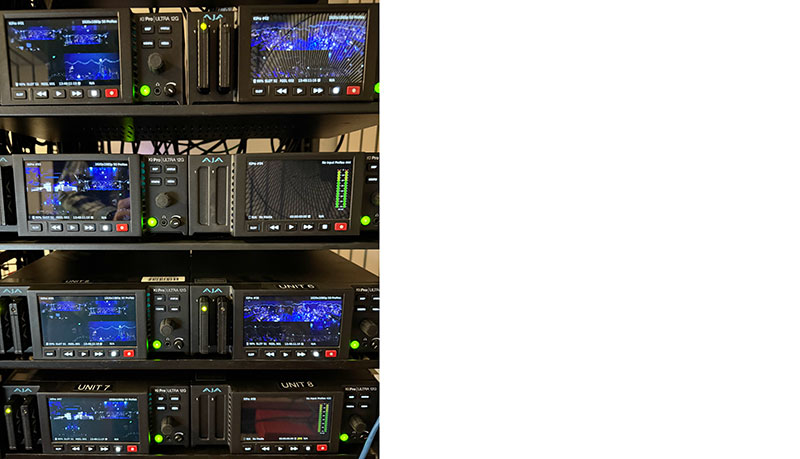
Some clients just want an H.264 recording immediately following the event for performance review. In other cases, the team makes a recording available for streaming or VOD (video on demand) viewing on Digital Stage. They will also cut promos, highlight reels or social media teasers in a range of different formats and resolutions upon client request. Most often, this means they're recording the ISO and main program feeds in Apple ProRes. All of this is made possible by the in-house setup Michael has built, removing the need for outside broadcast expertise to achieve similar outcomes.
On the Network
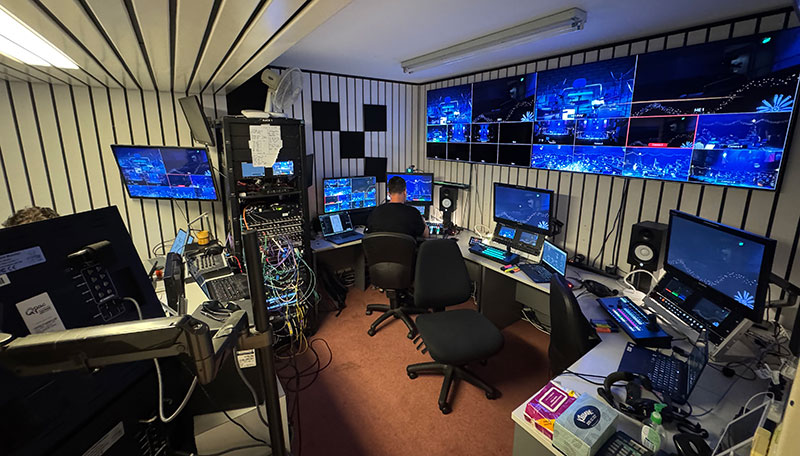
QPAC's new infrastructure is comprehensive, involving gear set up at multiple venues on campus. Each venue and the main control room house a RIEDEL MicroN signal interface, which has numerous different audio, video and data I/Os – 24 3G/HD/SD-SDI video ports and two MADI ports for up to 128 audio channels, plus a 1G Ethernet port and two sync reference I/Os for data transport and synchronisation. With eight 10G SFP+ high-speed ports giving a total of 80G MediorNet network capacity, users can configure a redundant meshed media network.

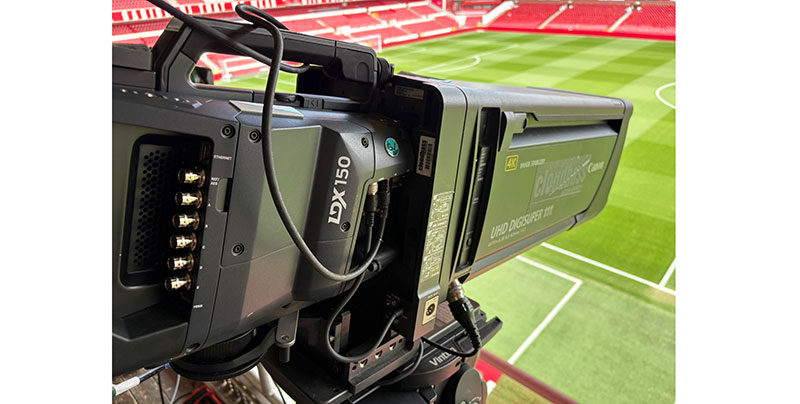
During events and performances, genlock signals are output to AJA C10DA analogue video distribution amplifiers and distributed to a mix of cinema and PTZ cameras. All camera control, Dante audio and comms are also run through agnostic Ethernet tunnels to breakout switches.
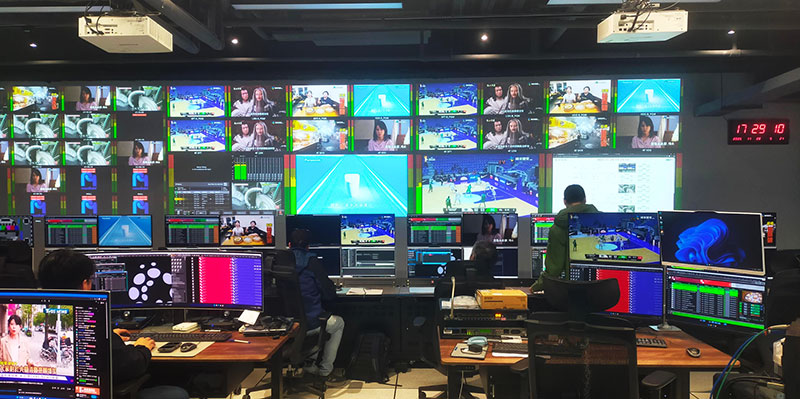
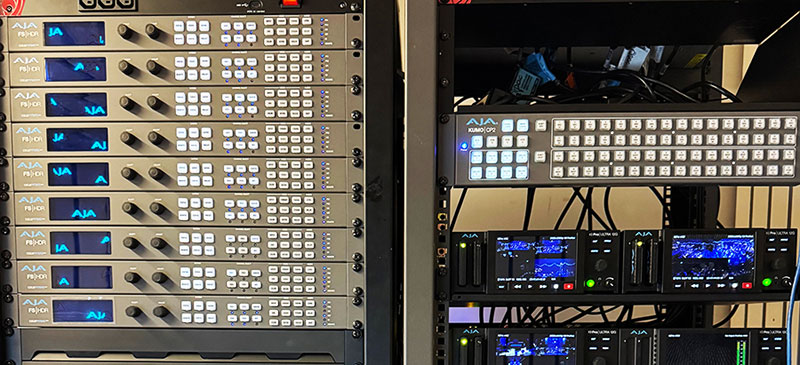
Camera feeds run through SMPTE fibre to a studio breakout box, where Michael’s team patch outputs, sync, return vision and tally to/from the MicroN. The signals then reach the control room, where they go directly into eight AJA FS-HDR frame synchronisers for colour matching.
Colour Fidelity
The FS-HDR is particularly useful in live event AV environments where real time, low latency processing and colour fidelity is needed for 4K/UltraHD and 2K/HD workflows. The devices also convert common camera formats, developed by various vendors, into the HDR space, and handle conversion to and from BT.2020/BT.709, as needed for general compatibility of HDR alongside SDR in broadcast and OTT workflows.
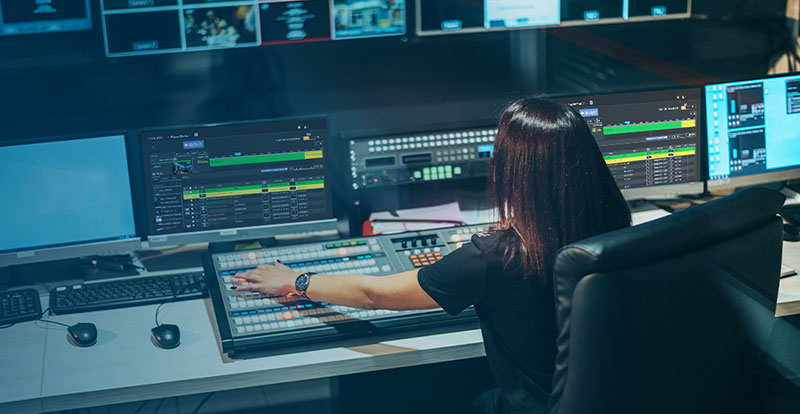
The FS-HDRs output to an SDI router, where Michael’s team can connect to their switcher and to AJA Ki Pro Ultra 12G recorders. If needed, they can also split the format to record ISOs in 4K HDR while switching and streaming in 1080p SDR, and supply synchronisation and MADI audio embedding to SDI.
Using the FS-HDR, they apply a LUT and use the internal Proc Amp to adjust the black level, contrast, colour and white balance in real time, thereby improving the skin tones.
"Moving forward, we'd like to use five AJA ColorBoxes across venues as an inline LUT for colour matching across cameras or as a PGM output if they want to create a certain look. This will allow us to free up our FS-HDR units for other important video processing tasks," said Michael. "We'll also be able to connect a ColorBox to an output to apply an established look to the master feed if required."
Although ColorBox is mainly used for previews, it can also be applied as an SDR to HDR conversion in live production to produce an output that perceptually matches HDR looks. It uses the Colorfront pipeline, which adopts the human perception model to remap colour and maintain the original creative intent. In ColorBox, all video processing happens in near real time. Applications include colour correction, SDR, HLG, camera LOG transforms and Dolby Vision previewing in broadcast, live events and on-site applications
Audio/Video Sync and Critical Conversions
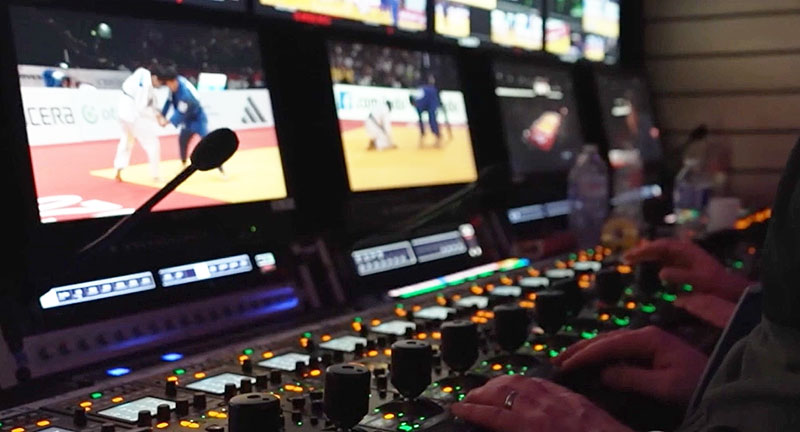
To synchronise digital audio and video, QPAC uses an Antelope Trinity master clock with Dante or MADI signals in their audio suite. A genlock signal is then split off and goes to a Rosendahl MIF-4 midi timecode interface, which has a video sync signal input, and synchronises the frame rate to timecode. Timecode is then sent to the recorders and studio equipment. The audio suite breaks out to the mixing console, and embeds the audio with the video side using the MADI interface on the FS-HDR.
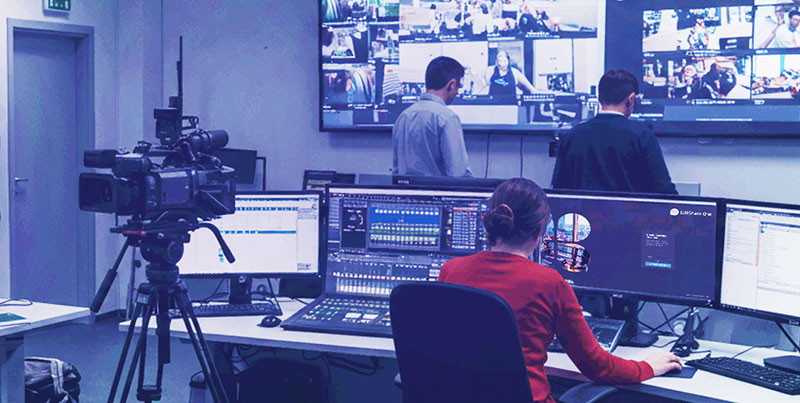
The remote operations team, working through in-house communications, uses Elgato Stream Decks with customisable LCD keys to change monitor feeds and camera settings.
The operations at QPAC must meet a number of conversion demands, which the AJA Mini-Converters like the C10DA and FiDO fibre optic converters are helping to address. FiDOs power a majority of the venue's signal conversion. For editorial, they cut programming and other promotional materials in-house using a few Macs and a PC for graphics and animation. All audio is post-mixed and added to the video.
For live streaming, the HELO Plus H.264 streaming and recording device is a core part of the workflow. "HELO Plus is a very dependable device that is easy to program. It is compatible with just about anything, and handles compression on the fly," Michael commented. "We're also exploring the possibility of integrating BRIDGE LIVE into our pipeline to support transcoding and streaming needs."
Planning for Change
"We use a lot of AJA gear across the board because it's rock solid, and AJA’s support is excellent," noted Michael. "Their gear is affordable, but performs as if it's more expensive. Updates are regular and meaningful, and the free apps are very useful."
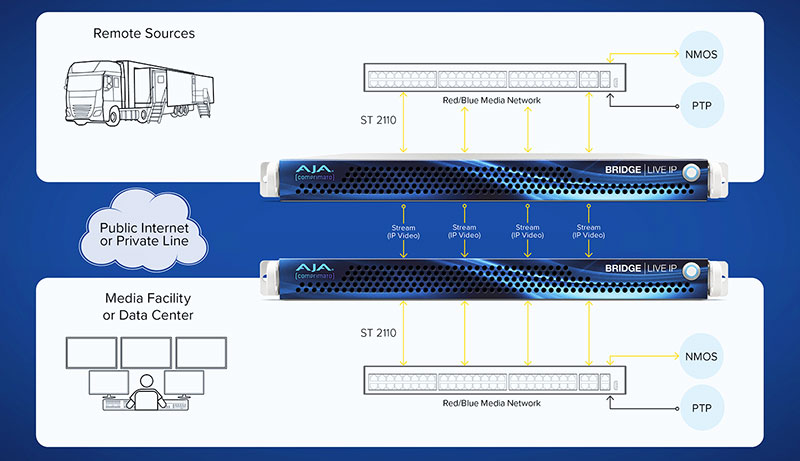
With their upgrade nearly complete, Michael has begun to think ahead, observing how the AV over IP evolution will play out in the coming months. "AV over IP is becoming more important. It's certainly something we're exploring and an area where technologies like AJA's BRIDGE LIVE could really prove an advantage," he said. Built for all types of multi-bit rate/multi-format streaming, from remote production to contribution to direct-to-consumer delivery, BRIDGE LIVE can work through various IP video standards or SDI, or both. Important for QPAC, it supports real-time, bidirectional encoding, decoding and transcoding for UHD or HD workflows. www.aja.com