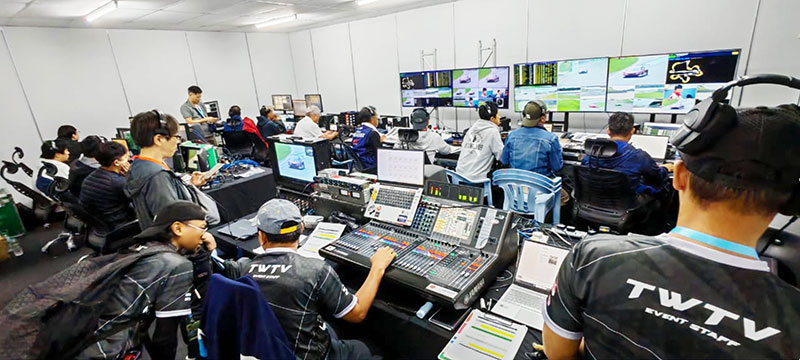



NDR integrated the LDX 180 and C180 into OB trucks for political debate show Die 100, capturing the show’s visual language, people and emotion with the cameras’ cinematic features
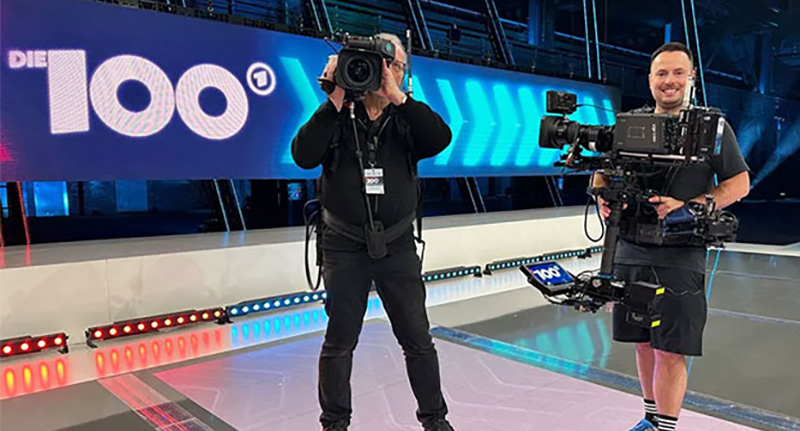
For Mathias Kampe, Production Manager at NDR in Germany, producing the political talk show Die 100 – was Deutschland bewegt, is always a challenge. Its format depends on real people, real opinions and real emotions, leaving little room for technical uncertainty, especially when the shows go live on air.
In Die 100, 100 ordinary citizens gather in a studio to debate a single topical question. Beyond a traditional panel discussion, participants physically move to one side of the room or the other to indicate their opinion – Pro or Contra. Two journalists present factual context and arguments for both sides, and the show host then moves through the room, drawing out individual stories and thoughts from participants. Reflecting the range of opinion across German society on major issues, the audience's collective movement – and its shifts during the debate – are what creates the drama.
Visual Language
“From a production management perspective, reliability is not a feature,” Mathias said. “It is a prerequisite. “At the same time, the visual language of the show is now playing an increasingly important role for the audience, who pretty clearly expect more than just functional pictures.”
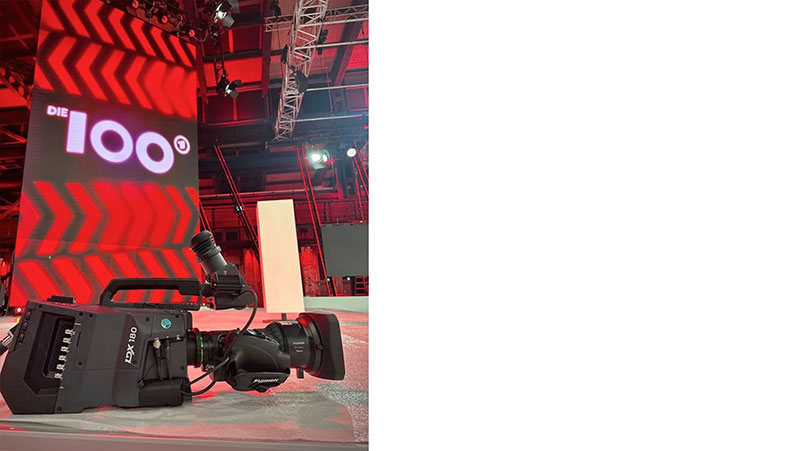
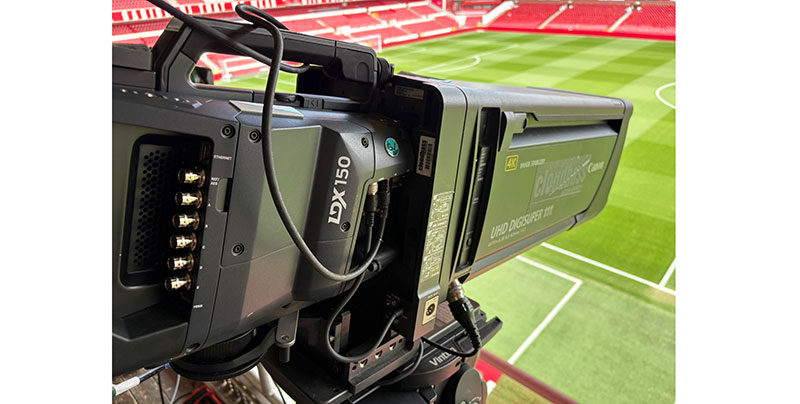
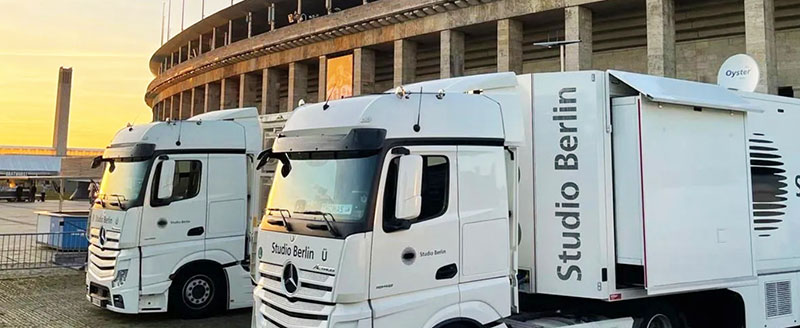
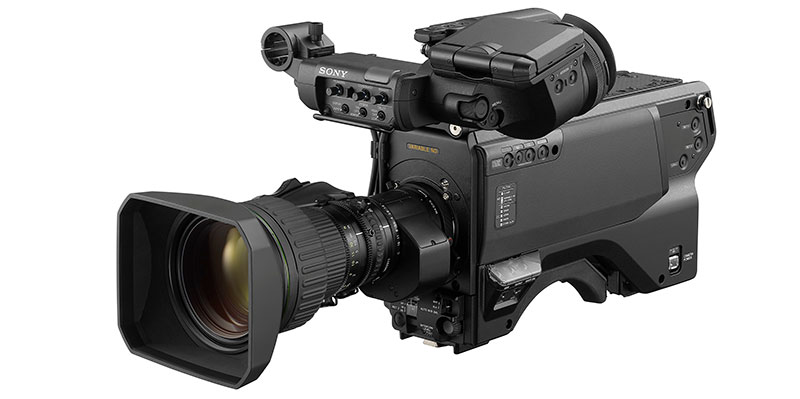
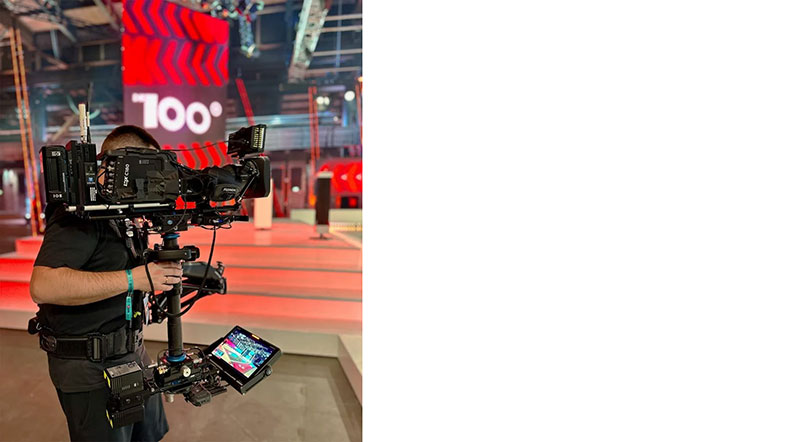
For the December 2025 productions – one of which was pre-recorded on 6 December and the other produced live on 8 December – their editorial team was keen to generate a cinematic look, and asked the production crew to expand NDR’s camera equipment. Their new outside broadcast trucks had all been equipped with Grass Valley’s LDX 135 systems, so for this expansion they decided to integrate Grass Valley’s new cameras, the LDX C180 for the Steadicam and the LDX 180 as a handheld camera, into their existing environment.
The LDX 180 is built on a proprietary Grass Valley Super 35 Xenios CMOS sensor with global shutter and oversampled UHD resolution – that is, the sensor is of a higher resolution than the camera output image resolution.
Between Complexity, Coordination and Compromise
Mathias commented, “From experience, adding cinelook cameras is usually the moment when additional complexity starts to creep into a production. Different camera generations or different brands often mean more setup time, more coordination between departments, and usually means making compromises in image matching.
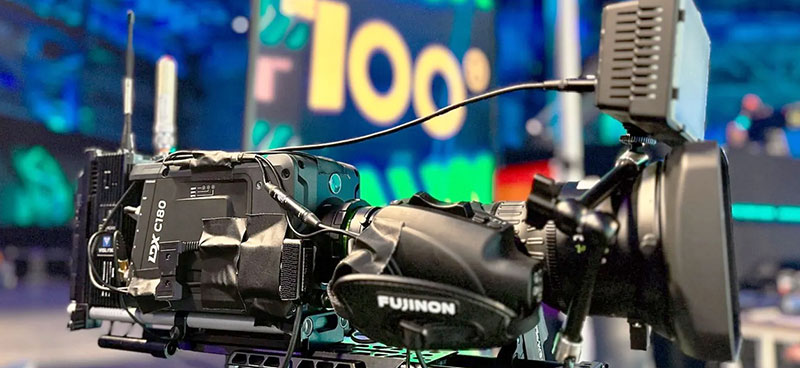
“In this case, that did not happen. The cameras integrated into our workflows without friction and behaved exactly as we expect broadcast cameras to behave. Operation was familiar for the crew, technical supervision was straightforward, and from the first rehearsal onward there was a strong sense of confidence in the system. That may not sound spectacular but in live television, confidence is probably the most important quality you can ask for.”
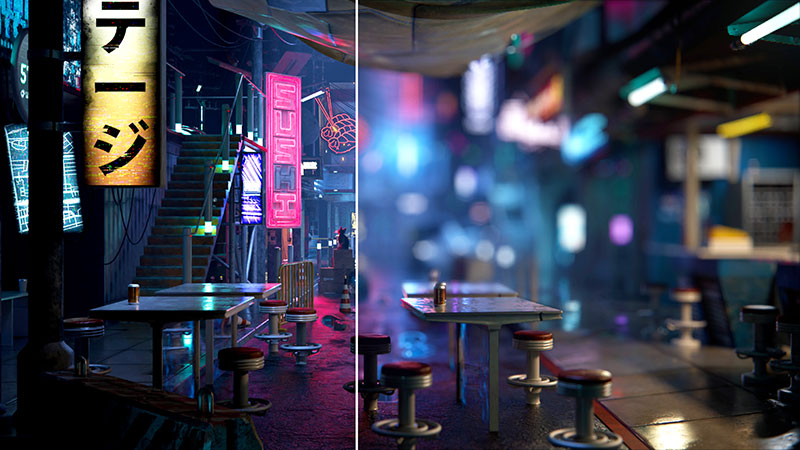
What soon became apparent was the flexibility and greater scope for creativity the cameras afforded them. The option to work with a shallower depth of field, for instance, allowed the team to create more intimate images and clearer subject separation within the crowded studio environment.
Creating a shallower depth of field depends on the focal length of the lens, which in turn depends on the size of the sensor. However, an overly shallow depth of field, resulting from the small 2/3” sensors broadcast cameras often use, can complicate focussing during live productions. Consequently, the answer isn’t only about using larger sensors for all camera positions, but about choosing cameras with sensors of the appropriate size for each position.
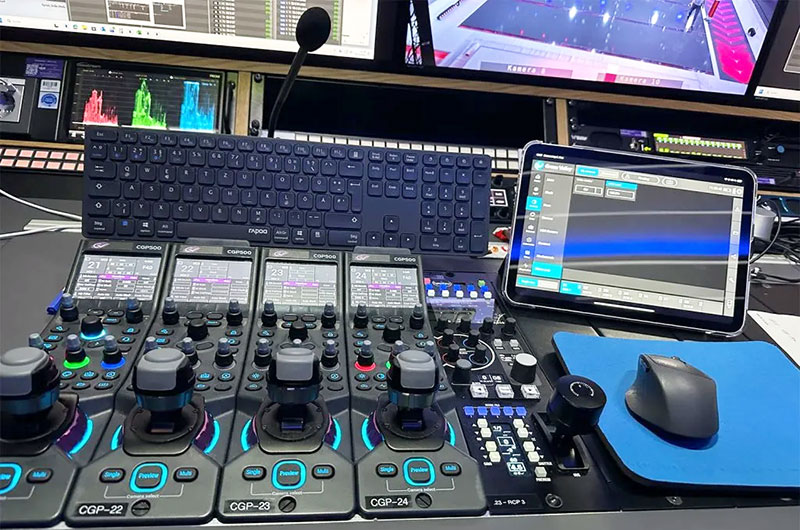
Furthermore, sophisticated live production setups usually call for a range of camera types – standard system cameras, super slow-motion, wireless and compact cameras – which makes consistency an important consideration. The necessary level of uniformity in terms of colour reproduction, gradation and image sharpness across all cameras is achieved through consistent signal processing. This feature makes sure that, in spite of differences in the cameras’ design and function, each one produces an image quality that aligns with the overall look of the production.
Optimised for Live
According to Grass Valley, a camera optimised for live applications, while aiming for a film look, would feature a larger imager, like those used in digital cinematography cameras. A Super35 imager with PL mount lenses was chosen for the LDX 180 as the best compromise for live productions. Many live applications also require a global shutter, which isn’t always available in digital cinematography cameras but has been included in the LDX 180.
“This combination of features supported the Die 100 format extremely well, especially in close conversations and emotional moments,” said Mathias. “At the same time, the look never felt disconnected from the rest of the production. The images matched naturally with our other LDX cameras, without the need to fight inconsistent looks or compensate for flat images during shading.”
Broadcast Tools
Mathias remarked that the image quality itself was consistently credible and compelling. The pictures were clean and detailed, and looked natural even under demanding lighting conditions. Colour reproduction was reliable, and camera-matching remained predictable throughout the production. He said, “The feedback from both the production team and the editorial staff was very positive, which is always a good indicator that technology is supporting the content rather than drawing attention to itself.
“What I personally appreciate most is that these cameras feel like proper broadcast tools in the best sense of the word. There was no tinkering, no experimental setup, and no additional risk introduced into the production. They simply worked just as expected. That reliability made it easy for us, as production management, to trust the technology fully and focus on delivering the show.” www.grassvalley.com