


BCNEXXT works with broadcasters and operators on transition strategies and IP-based alternatives to satellite distribution as FCC considers retrieval of Upper C-Band spectrum.

As the FCC (Federal Communications Commission) explores a potential retrieval of Upper C-Band spectrum currently used for broadcast distribution, BCNEXXT is working with broadcasters and operators to outline transition strategies and evaluate IP-based alternatives to satellite distribution.
BCNEXXT has outlined transition frameworks to support broadcasters as they assess the operational, architectural and economic impacts of a potential reduction in C-Band availability. These frameworks are intended to help organisations plan for IP-based, edge-centric distribution architectures that move beyond one-for-one satellite replacement.
The FCC's Notice of Inquiry into the Upper C-Band (3.98–4.2 GHz) reflects earlier spectrum reallocations that reshaped broadcast contribution workflows and led to the emergence of new technologies, companies and business models. This time, however, the potential disruption exists at the distribution layer, with implications that extend beyond infrastructure replacement to how content is localised, assembled and monetised.
"We've seen this type of transition before," said Graham Sharp, VP of Sales and Marketing at BCNEXXT. "When contribution workflows changed, entire categories of technology and services were created. What's being discussed now has the potential to trigger a similar shift on the distribution side. Broadcasters need time to plan, and that planning needs to look beyond simply swapping one delivery mechanism for another."
Edge-Based Monetisation
C-Band satellite has long served as a reliable backbone for broadcast distribution, but it is also capital-intensive and operationally rigid. A move toward IP-based distribution could accelerate long-discussed industry goals around flexibility, scalability and localisation.
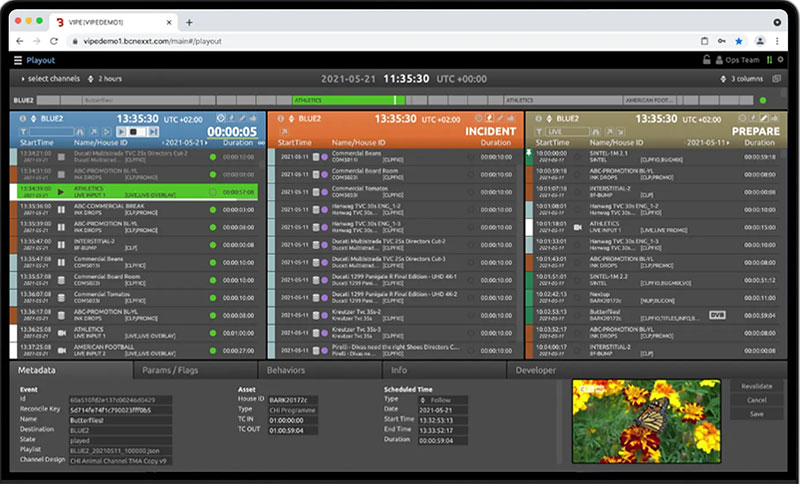
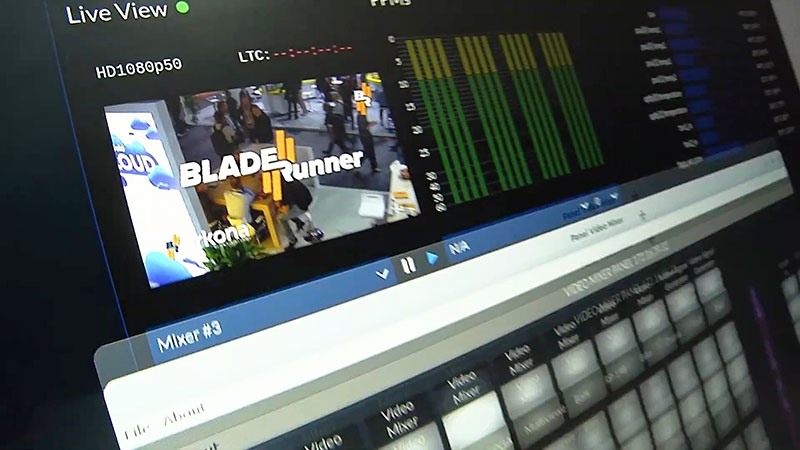
BCNEXXT Playout Control
BCNEXXT believes the transition presents an opportunity to rethink how and where content is assembled. By shifting playout and content finalisation closer to the point of distribution, broadcasters and operators can enable more granular regionalization and support hyper-local advertising and programming models that are difficult to achieve with centralized satellite workflows.
"When content is assembled at the edge, distribution becomes a monetization layer," Graham Sharp noted. "It enables regional and local variation without rebuilding an entire network, opening the door to revenue models that are far more targeted and adaptable."
Distributed Architecture for IP Workflows
BCNEXXT's Vipe platform was architected for distributed, IP-centric playout environments, supporting lightweight deployments at points of distribution while maintaining centralized control. In a post-C-Band scenario, traditional satellite-based headend architectures can be complemented or replaced with IP-connected playout nodes capable of receiving feeds, storing content, and assembling channels locally.
Rather than selling a predefined product offering, BCNEXXT is engaging with broadcasters to determine the best platform configuration to support the evolving distribution requirements.
"The biggest risk is waiting until decisions are finalised," said Graham. "These transitions take time. Our message to the industry is simple – engage early, plan deliberately and be ready for what comes next." www.bcnexxt.com