


Haivision’s Broadcast Transformation Report shows changes in the industry affecting remote production, SRT and mobile use for live contribution, AI adoption and expansion of ST 2110.
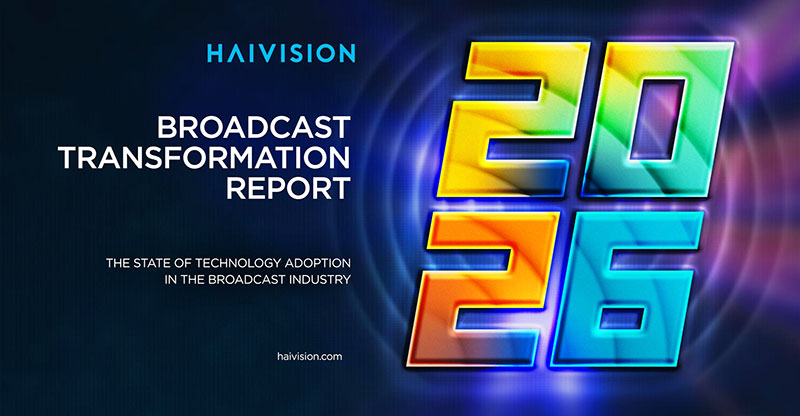
Haivision has released its seventh annual Broadcast Transformation Report. Based on input from more than 1,300 broadcast professionals worldwide, the 2026 report gives a wide-reaching snapshot of adoption trends, ongoing challenges and areas of emerging innovation shaping the industry.
The findings highlight a continued focus on remote production, increased use of SRT, growing reliance on mobile networks, AI adoption and the dominance of SDI. Visualising an industry balancing modernisation with operational realities and constraints, the report examines how broadcasters are adapting workflows, infrastructure and technology investments.
Key Broadcast Trends from the 2026 Broadcast Transformation Report
Remote production dominates technological priorities. For several years, broadcasters have identified enabling remote production as their leading technology focus for the next 12 months. In fact, it has consistently ranked as the top choice in the report for the past four years, with 41% of respondents citing it as their priority in 2026.
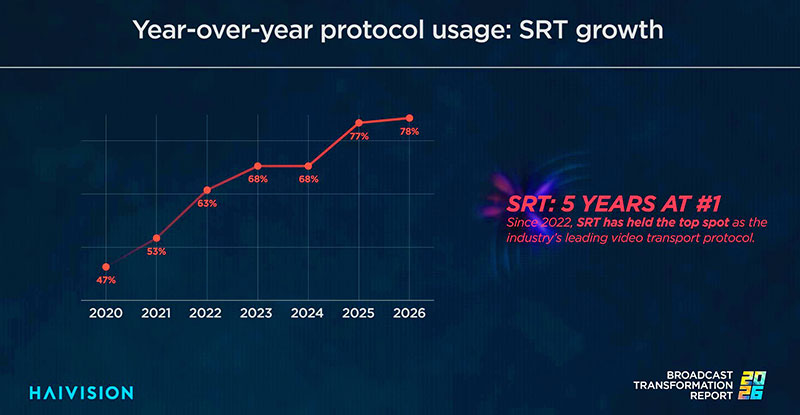
SRT celebrates 5 years at No 1. Since the report's debut in 2020, SRT usage has steadily grown in broadcast workflows, ranking as the most widely used video transport protocol over the last five years. SRT adoption climbed from 47% in 2020 to 78% in 2026 – a 31% increase overall.
Broadcasters embrace mobile for live video contribution and redundancy. Broadcasters have continued to increase their reliance on cellular networks in their live video contribution workflows. In 2026, 54% of respondents reported using cellular networks for live video contribution, up from 46% in 2025. When using fibre as their primary network for remote production workflows, cellular networks are the leading choice for redundancy, with 61% of respondents using them for backup to fibre.
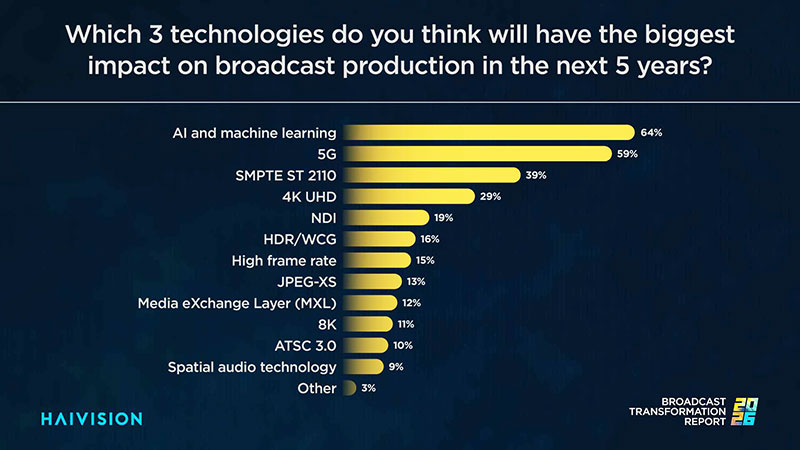
AI tops the list as the most significant future technology. While AI usage among broadcasters rose slightly from last year's report – from 25% in 2025 to 27% in 2026 – the outlook for AI is very strong. 64% of respondents cited it as the technology expected to have the greatest impact on broadcast production over the next five years.
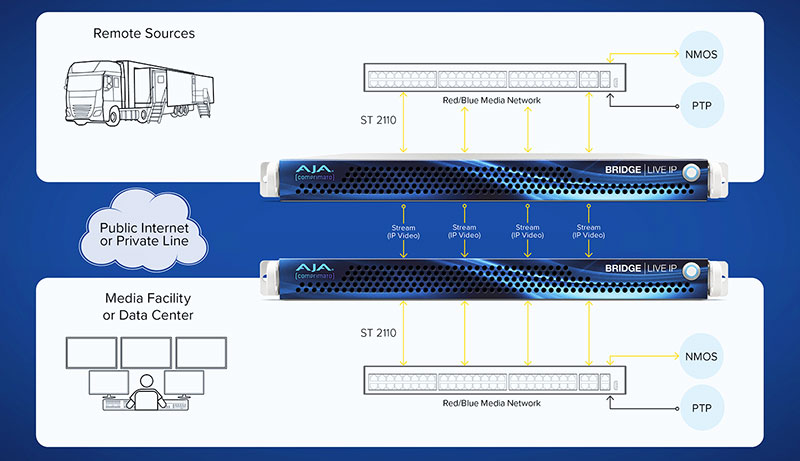
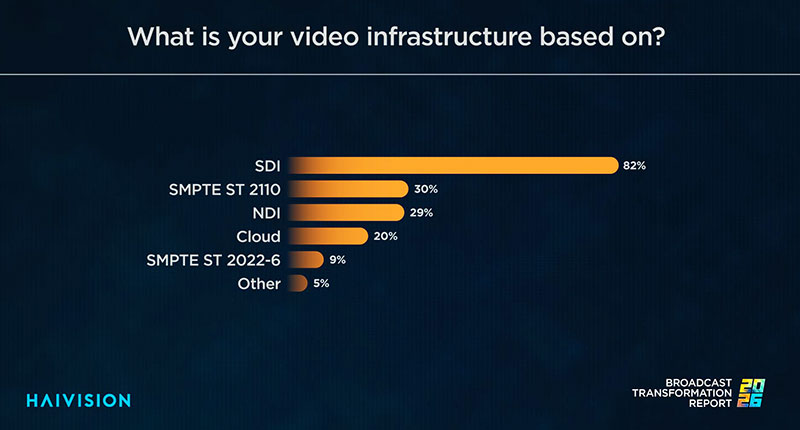
SMPTE ST 2110 adoption is growing, but SDI still dominates. SMPTE ST 2110 adoption is rising, however SDI remains the backbone of most broadcast operations. This year, 30% of respondents reported using ST 2110, up from 26% in 2025. Despite these advances, SDI is dominant, with 82% of respondents leveraging SDI infrastructure.
"Broadcasters continue to evolve their workflows while navigating operational and financial realities," said Marcus Schioler, Vice President of Marketing at Haivision. "With record participation in this year's survey, the report reflects a broad industry perspective balancing innovation with operational reality, where reliability, flexibility and efficient contribution workflows are essential to supporting future growth."
The findings reflect an industry increasingly relying on hybrid workflows that combine established and emerging technologies. While SDI remains foundational, IP-based contribution, cloud-enabled workflows and cellular connectivity continue to shape the future of live production.
The 2026 Haivision Broadcast Transformation Report is available for download here – 2026 Haivision Broadcast Transformation Report www.haivision.com