


Film and broadcast pioneer DSC Labs, known for R&D into colour calibration and testing tools, has a new owner after 60 years, acquired by an experienced DIT and image workflow specialist.
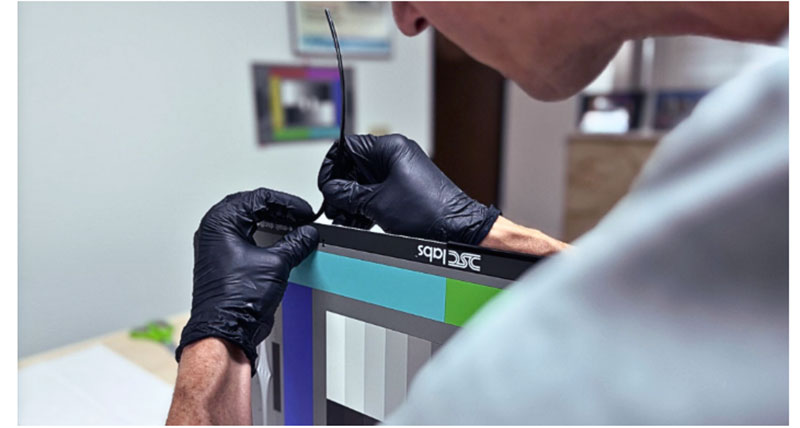
One of the pioneers of the film and broadcast industry, DSC Labs, known for its research and development into colour calibration and testing tools, has changed ownership after 60 years. The company has been acquired by Matt Conrad, an experienced digital imaging technician and image workflow specialist, following an ownership transition completed in mid-2025.
DSC Labs was founded by David and Susan Corley to meet the need for reliable calibration and colour consistency in telecine and lab work. Over the years, the company, with the Corleys continuously at the helm, gained recognition for its high-precision colour calibration and resolution charts.
The Corleys used their research into television phosphor chromaticities (precise specifications of the colours displayed on TV screens) and computerised calibration methods to align their charts, test patterns and colour matching systems with EBU and other phosphor standards. The company has earned much industry recognition and many awards, and its test materials have been widely adopted among clients working in television, camera engineering and digital cinema, enabling evaluation and calibration.
DSC Labs Innovations
Notable innovations include the Xyla rear-lit test pattern charts to help users accurately measure and calibrate the dynamic range of sensors of HDTV and digital cameras before purchase. Used in a totally dark environment, it has a built-in light source and numbered neutral steps that can be viewed individually or in groups.
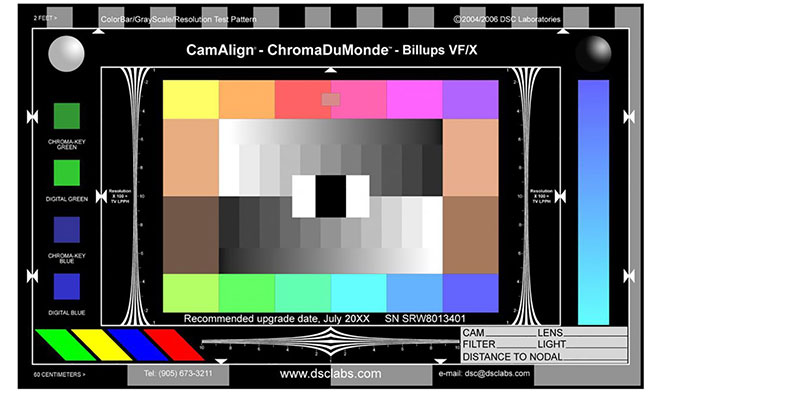
Some other recognised DSC Labs developments are the ‘Fuzzies’ soft-edged projection mask system, the large format (8" X 10") transmissive test pattern and Ambi illuminator, CamAlign front lit charts, 3-D test charts and the ChromaMatch system.
DSC Labs also defined the ChromaDuMonde hexagonal vectorscope simulations, charts made to align with SMPTE and ITU standards for use with television systems. ChromaDuMonde is used to evaluate and adjust a video camera’s colour matrix and gamma with a waveform/vectorscope. These charts generate accurate hexagonal displays for HD, SD and NTSC television images and have precise crossed grayscales for setting gamma.
They are especially useful for true reproduction of skin tones and custom colours. During production, they can be used to check and adjust cameras to balance the effect of hue changes on surrounding colours, and to control scene-to-scene consistency between lighting changes.
Ongoing Relevance
New DSC Labs President Matt Conrad recognised the ongoing relevance of DSC Labs’ tools for DPs and videographers today, when so many broadcast and film productions are working with widely varied acquisition formats and workflows.
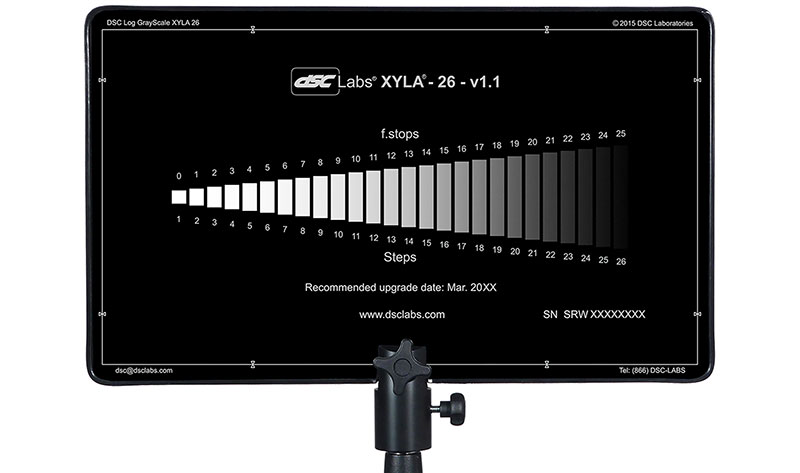
Xyla rear-lit test pattern charts help users measure and calibrate dynamic range in a sensor.
A working DIT with experience ranging from commercials to streaming TV programming and movies, Matt’s credits include the feature films Everything Everywhere All at Once, Swiss Army Man, Wolfs and The Eras Tour – The Final Show (Taylor Swift). Among his other work are numerous Super Bowl halftime shows and TV specials for various performers.
Having worked on such a range of multi-camera, mixed-format projects, Matt is always aware of the need to align cameras and has considerable experience working with colour reference tools. “My career started on film and has progressed through to streaming content. A significant change came for many producers in the industry when Netflix chose to deliver a more cinematic look in its productions,” he noted.
“Most recently, I’ve been working on live, event-based projects and managing live streams. For instance, I recently covered Coachella Valley Music and Arts Festival using both a VENICE and a RED camera, which made the need for consistency especially apparent – aligning all of your cameras on a project is essential. I really appreciate having a specific point of reference for the vectorscopes and for replication – for any camera. You can define your look, use it as a base level, and create from there.
Moving into Modern Workflows
“The Corleys made this kind of work the focus of their lives at DSCLabs. Other charts have simply not been as good as theirs or as easy to use. They also helped write specifications for the CBC, BBC and SMPTE. Initially, these were mainly for live productions but in the post workflow, they help colourists keep the producers’ intent, for each lighting scenario.”

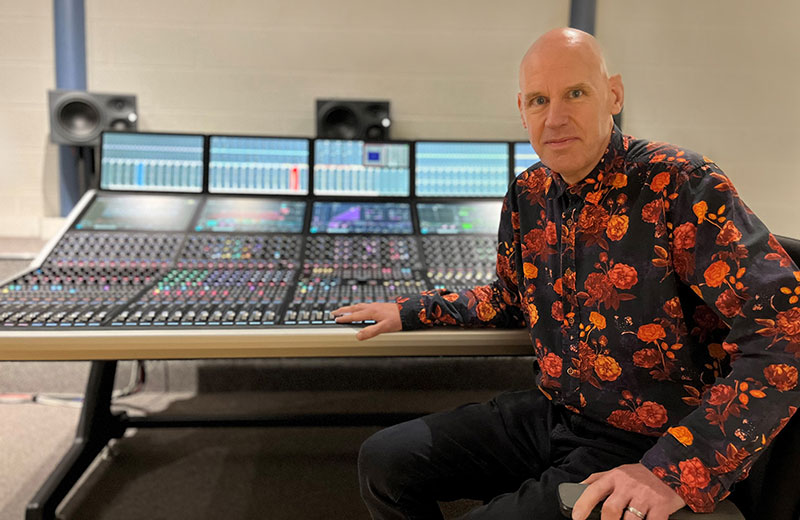
DSC Labs President Matt Conrad
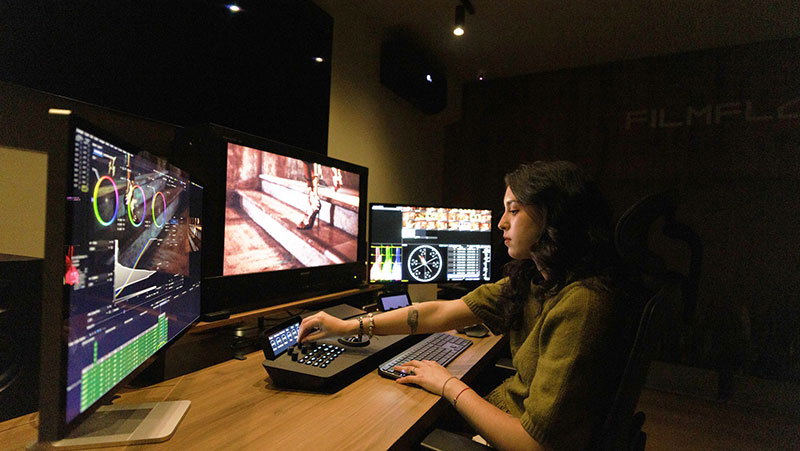
DaVinci Resolve has colour matching tools, but Matt finds they don’t go far enough. “For example, dynamic range needs to be analysed, and DSC’s Xyla analysis uses a set of rear illumination dynamic range charts. Ahead of shooting, filmmakers also need to look into f-stops, tonal curve and how roll-offs match, test the sensors and design their looks,” he said. Because the charts were made for use with vectorscopes and waveform monitors, the need for training to use them depends on the user’s understanding of and trust in scopes and monitors.
So far, Matt has made no substantial changes to DSC’s existing core products. As they have become a standard in so many workflows, he feels they should remain in place for filmmakers. What he would like to change is their usage. For instance, although Rec 709 is still in use, he wants to create a set of Rec 2020 charts.
DSC Labs was originally headquartered near Toronto, Canada, but now has a new home in Los Angeles, California in a brand new facility, prepared for future development. His initial plans focus on modern video workflows such as those needed by the new creator community producing for YouTube and houses of worship, and meeting the demands of higher end video productions for SDR/HDR output. He is also aiming to build a demo lab with field tools, and update DSC Labs’ white papers and documentation. dsclabs.com