

Avid’s new tools connect planning, production and publishing across linear and digital platforms to help teams produce more content across more platforms while controlling cost.

Avid’s new suite of integrated newsroom capabilities in Avid for News, coming to at NAB Show 2026, centres on its Avid Content Core platform – software tools that connect production workflows across MediaCentral, Wolftech News, iNEWS, Avid NEXIS and Stream IO.
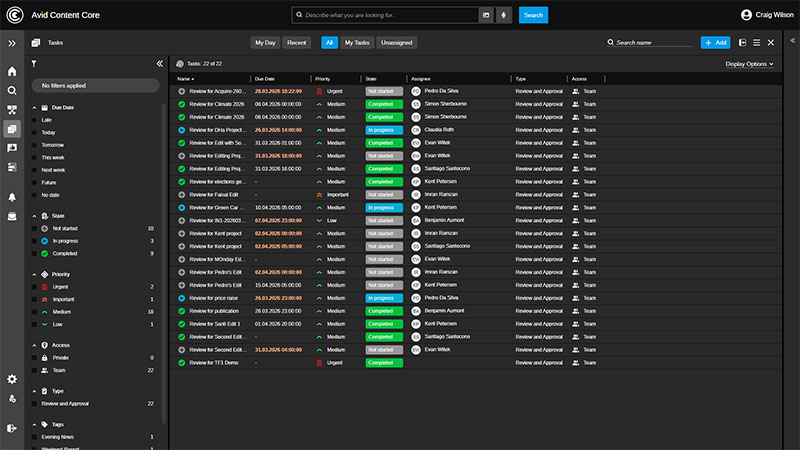
The platform targets news organisations that may be facing new pressures to produce more content across more platforms while controlling costs. Avid Content Core serves as a unifying layer across the production lifecycle – linking newsroom systems, creative tools and media storage into a single environment focussed on story creation. The company says this allows news teams to develop and publish stories in parallel, within a single, coordinated workflow, across digital platforms and scheduled broadcasts.
"Avid Content Core is an intelligent layer that connects the entire newsroom production lifecycle, linking stories, workflows and teams," said Wellford Dillard, Chief Executive Officer at Avid. "With Content Core now commercially available, Avid has delivered a unified foundation that makes news and media organisations faster, more efficient and better aligned."
API-first Approach Supporting Existing Systems
The integrated environment is designed to give editorial teams real-time visibility into content status and story progress. In contrast to single-operatore solutions that operate in isolation, Avid integrates stories, teams and workflows within Avid Content Core’s shared platform. Built on an API-first architecture, Avid Content Core is also intended to work alongside existing newsroom systems and third-party technologies rather than replace them — a point the company has emphasised for organisations wanting to avoid disruptive infrastructure change.
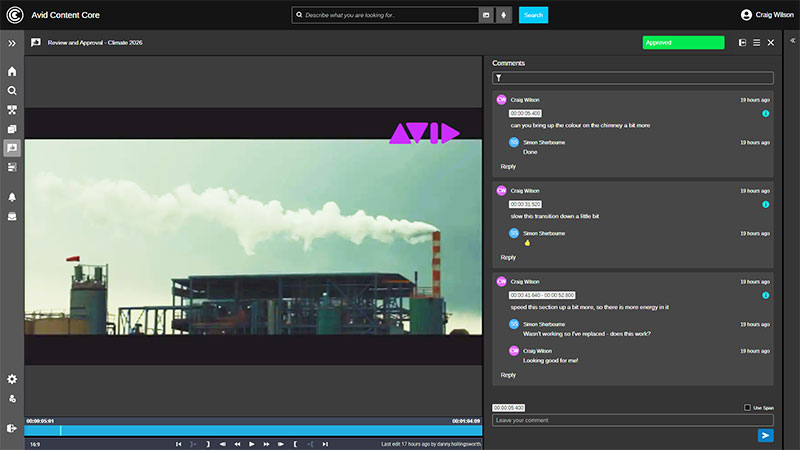
Practical capabilities on show will include coordinated planning, scripting, editing and publishing within a shared workspace. By reducing duplication and manual handoffs between teams, newsrooms can generate platform-specific versions for broadcast, digital and social more quickly. New browser-based editing and multi-platform publishing tools will also be demonstrated.
"At NAB Show 2026, we're showing how news teams can move from siloed workflows to a unified, story-centric approach without adding complexity," said Arne Berven, SVP of Broadcast Strategy at Avid and CEO of Wolftech. "The future of news is not digital-first or linear-first — it's both."
AI-assisted Content Discovery
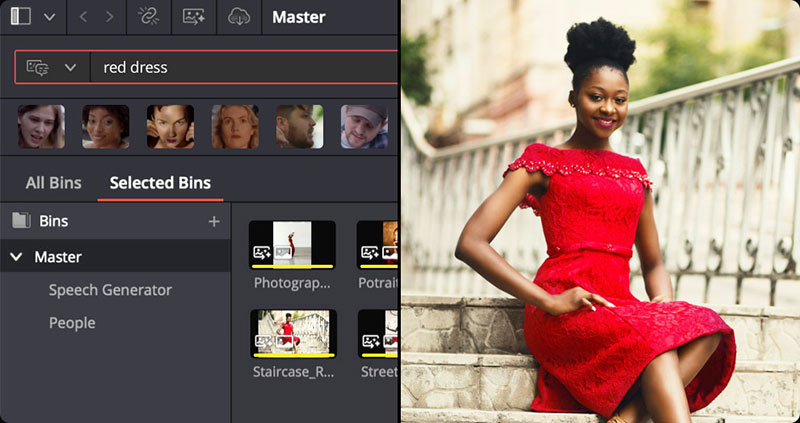
Avid will also demonstrate how teams can use AI-powered content intelligence tools embedded within Avid Content Core to discover, manage and develop content. These include semantic search across newsroom systems and media storage, improved surfacing of related assets and previously produced materials, and automated handling of repetitive tasks.
The company says the tools are designed to keep editorial teams in control, allowing them to scale output without increasing complexity, while reducing manual effort in content discovery and management.
Hybrid Cloud / On-Premises Working
Avid for News has been built to function in hybrid environments, supporting teams working across both on-premises and cloud-based systems without requiring infrastructure migration. At the show, Avid will demonstrate cloud-enabled extensions to its NEXIS storage solution and the Stream IO video ingest and playout platform. Recently been updated, Stream IO now includes content sub-clipping and trimming capabilities, giving operators more granular control over fast-turnaround workflows.
NAB – Demos and Previews
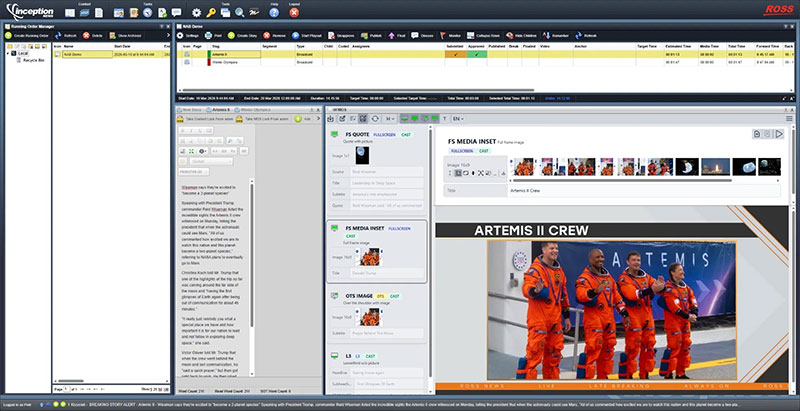
At NAB, Avid will preview several upcoming technologies developed with various partners. They include web-based editing powered by CuttingRoom, integrated Wolftech News and iNEWS rundown workflows and a new web-based Newsroom Computer System (NRCS) with rundown functionality, also powered by Wolftech.
Avid has framed the overall proposition as one of incremental modernisation rather than complete replacement – allowing organisations to adopt new capabilities while continuing to use their existing tools and infrastructure. www.avid.com