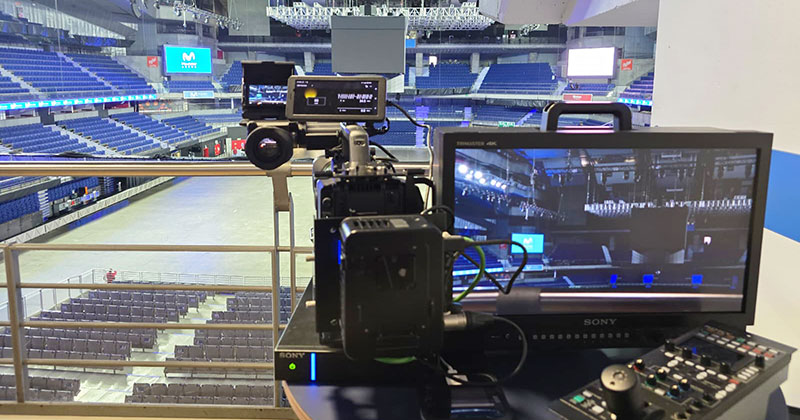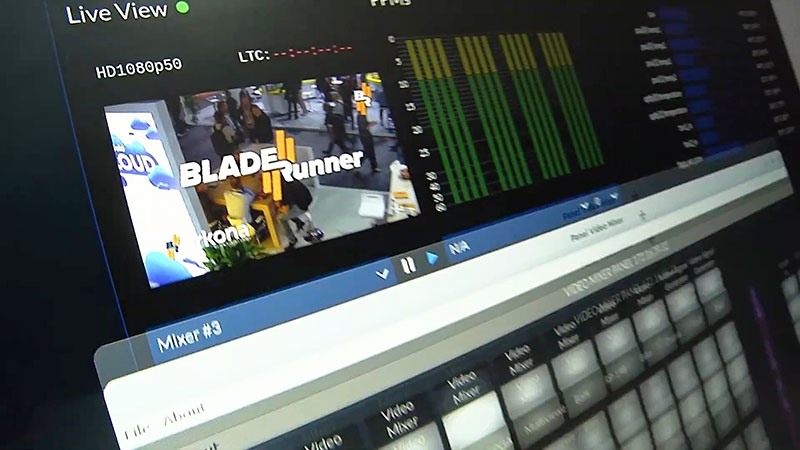



Witbe’s AI-powered streaming testing and monitoring infrastructure replaces script-based automation with real-time execution and analysis on real devices, across real networks.
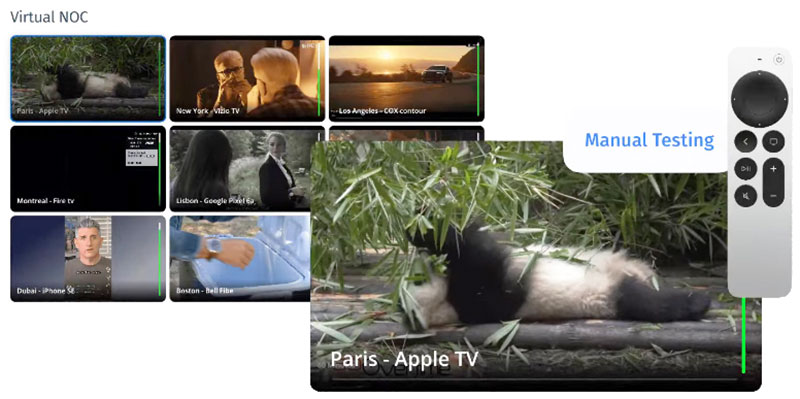
Remote manual testing with Witbe Smartgate.
At the 2026 NAB Show, Witbe has demonstrated how artificial intelligence has been changing the processes used to test and monitor today’s streaming services. The company has introduced an AI-powered infrastructure that replaces traditional, script-based automation with real-time execution, analysis and operations on real devices, across real networks.
AI-Powered Infrastructure for Streaming Video
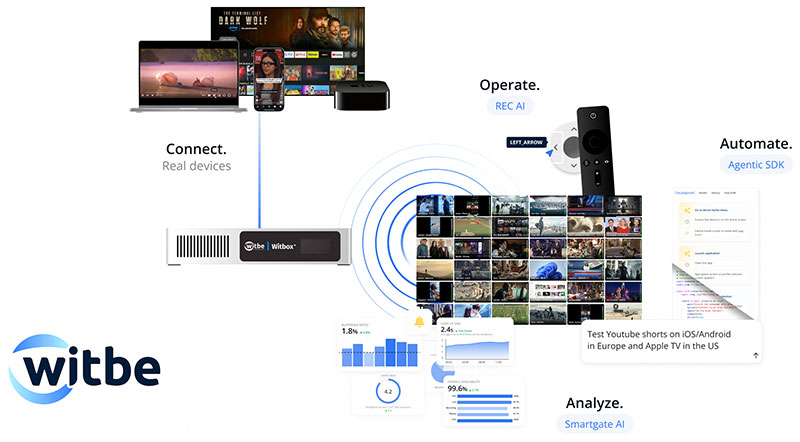
In Witbe’s new testing and monitoring framework, AI is embedded across every layer — from real devices to automation, operations and observability — actively driving how streaming services are. Built on proprietary technology developed over more than 20 years to include MOS-based video quality measurement and intelligent device control, the infrastructure connects four of Witbe’s products into a single system.
These products serve as four intelligence layers of a platform equipped to carry out real device execution (Witbox), AI-driven automation (Agentic SDK), operational control (REC) and intelligent analysis (Smartgate).
At its foundation are a global network of thousands of Witbox robots, currently deployed across ISPs, telcos and streaming platforms, and the Agentic SDK, introduced mid-February as part of Witbe Suite version 41. The SDK is an automation framework where teams generate and execute tests through natural language, hybrid pre-built workflows or full code-based customisation.
Together, the four components enable testing and monitoring workflows that adapt to application changes, scale across environments, and remain resilient across releases, without constant script maintenance.
Real-time AI Control of Streaming Services
Through the Remote Eye Controller (REC) — Witbe’s virtual NOC — teams can now interact directly with their testing infrastructure using natural language. This ability means that users can instantly trigger tests across one or hundreds of real devices and launch ad-hoc validations without scripting. They can also organise devices and streams dynamically over time, according to service, region or use case, while montoring execution in real time across global environments
Instead of managing tools, writing scripts or coordinating environments directly, teams instruct the system and execution happens immediately. This introduces an interesting new operational model where testing becomes interactive, continuous and operational.
AI-Driven Analysis and Issue Detection
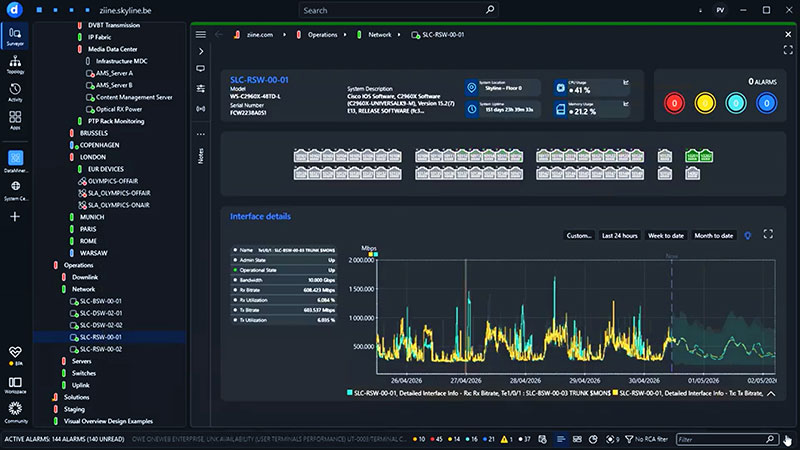
This fourth intelligence layer is powered by Smartgate, Witbe’s observability platform that continuously analyses test results at scale. Instead of waiting for teams to investigate issues, Smartgate starts by identifying and categorising issues automatically, explaining and prioritising them proactively.
Smartgate compares failed and successful executions to determine root causes of such incidents. It is able to detect quality degradation across devices, ISPs and regions, and detect patterns across large volumes of executions.
This shifts teams from reactive troubleshooting to continuous quality control.
Not Improving Workflows but Replacing Functionality
“What we are seeing today is only the beginning,” said Mathieu Planche, CEO of Witbe. “AI is not improving testing workflows – it is replacing how they work. Teams no longer need to write and maintain scripts. They define what they want to validate, and the system executes it across real devices. This is a fundamental shift in how streaming services are tested and monitored.”
New capabilities and workflows are being introduced continuously — expanding how teams use AI to test, monitor and operate streaming services at scale. www.witbe.net