


TSB and uniqFEED are innovating and evolving their virtual advertising integration into accessible remote services for sports rights holders at remote operations centres in APAC and Europe.
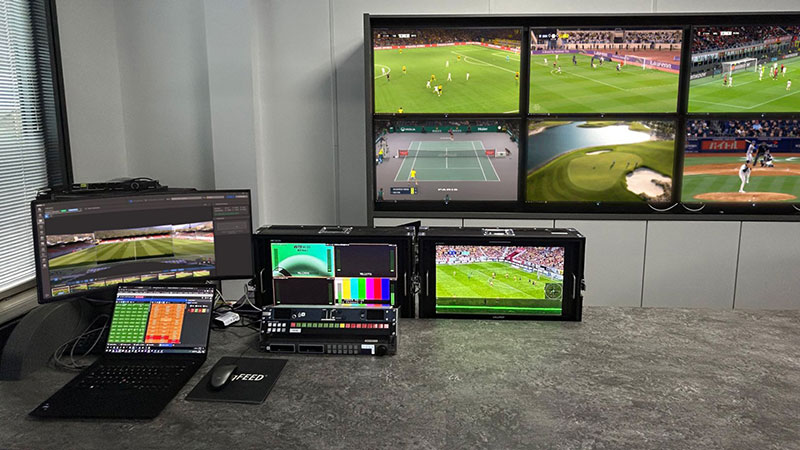
In September 2025 Telstra Broadcast Services (TBS) and virtual advertising specialist uniqFEED opened two Remote Operations Centres (ROCs) in Sydney and London, further developing the virtual advertising technology integration they had formed earlier in that year into an accessible service for sports rights holders working in APAC and Europe.
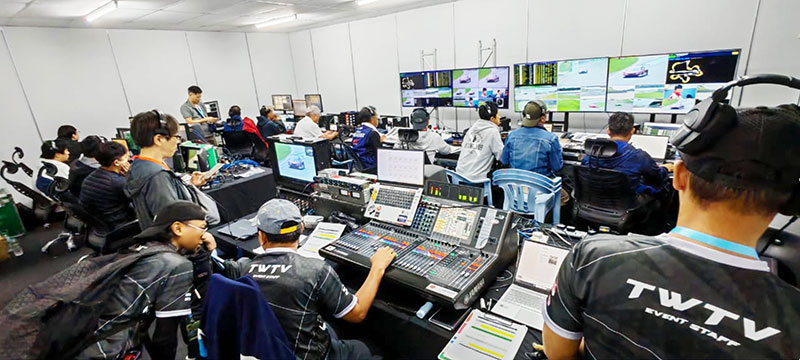
Designed to meet demand for remote-first broadcast operations, the ROCs are equipped to handle AI-powered virtual advertising and remote workflows. They aim to enhance agility and efficiency, and increase options for monetisation.
Inside the ROCs
The Sydney centre, located in Telstra’s Master Control Room, has a capacity for up to four concurrent sports events, while the European facility, based in Telstra's London Hosting Centre, can facilitate up to two. Interestingly, both centres are interconnected, which makes it possible to operate up to six concurrent sports events that can be managed remotely from anywhere in the world. This set-up also allows both facilities to contribute to each other, increasing flexibility.

When signals from stadiums and sporting events reach these centres for processing, they are fed into uniqFEED’s proprietary AdApt software which generates virtual event feeds with tailored content. These feeds are then delivered to broadcasters, so that audiences at locations around the world are able to see advertising relevant to their market.
Virtual Advertising – an Evolution
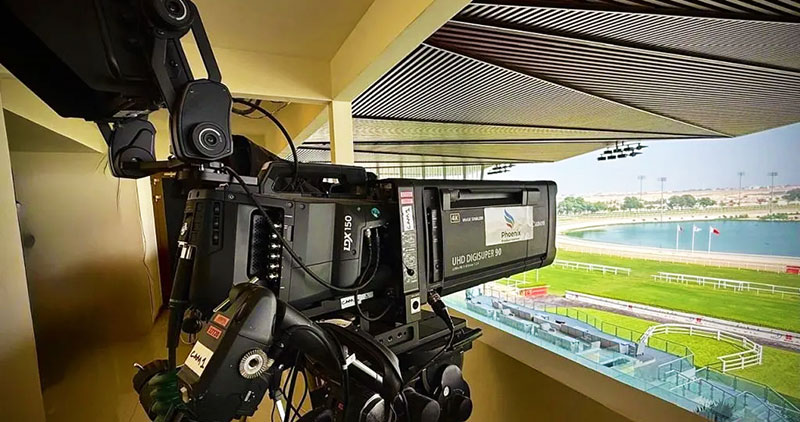
Looking back at the evolution of virtual advertising, it traditionally focussed on compositing the ads into video images to appear as if they were lying directly on the pitch or field. Later on, perimeter boards and other blank surfaces could be used as well as the pitch. However, achieving precise, undetectable compositing needed extensive calibration and feed management equipment on the camera during recording, and specialised staff and servers for video processing had to be available on site.
Mark Strachan, Chief Product Officer at TBS, talked to Digital Media World about the practicalities of live, real-time virtual advertising, and how it has developed over time. “Eventually, calibrating the camera-venue system became much simpler, done by scanning the pitch with the camera with no need for extra equipment. ML/AI tools were also proving useful to identify features that the graphics should appear on, under, behind or in front of.
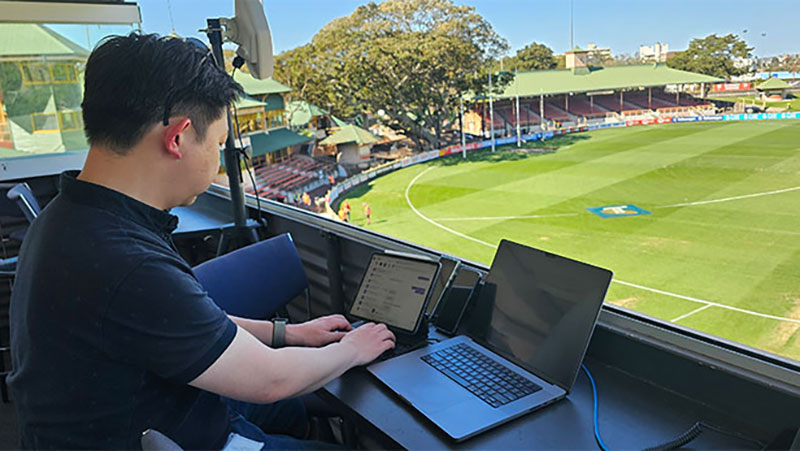
“Nevertheless, for some time, the most expensive and intractable part of the equation – the servers – were still needed on site for heavy processing, making remote production too costly or impossible. TBS and uniqFEED’s remote model has largely overcome the need for hosting hardware and large teams at venues, reducing costs and complexity for clients. It has also added a level of scalability that couldn’t be achieved earlier.”
Remote and Localised
Now, all processing can be done on equipment housed in central facilities such as TSB and uniqFEED’s ROCs. A camera operator still needs to scan the venue for calibration but the procedure is simplified and, otherwise, the staff on the ground can focus on storytelling and capturing high quality images of the event.
The operators deliver two feeds – a camera ISO feed, and the main program output – to the ROC, where the graphics are also handled. As each set of graphics is integrated into the program stream, that stream can be delivered to a different destination, appropriate to those graphics.
Mark said that the next technology iteration for virtual advertising, which has already been implemented for a few sports, is Program Feed Only. “This is where we no longer need to receive the camera ISO feed from the venue. Only the program feed is required, and we then apply all the virtual advertising and graphics using only the Program feed.
TSB’s Internet Delivery Network
Supporting the production and processing side of TSB and uniqFEED’s collaboration is reliable connectivity, for which TSB’s low latency Internet Delivery Network (IDN) is a strategic advantage. It can support uncompressed content, which avoids the need to transcode, and communicate with satellite services. While both of these factors can introduce delays of their own, the Telstra network adds adds very little latency.
“These Remote Operations Centres take advantage of robust reliable connectivity, to deliver smarter, more efficient solutions for customers,” said Mark."Our collaboration with uniqFEED, makes it easier for rights holders to customise and deliver content, without the need for physical hardware or on-site installations.”
Telstra’s Internet Delivery Network (IDN) serves as a primary contribution or distribution medium for Tier 1 and other tier sports and events. A fully managed and monitored service, the IDN can use connectivity and transport types such as 5G, including the upcoming 5G slicing, Low Earth Orbit (LEO) satellite and fibre – singly or in combination.
The IDN is a software-defined, cloud-based platform enabling the transport of original-quality video content and live broadcast streams to registered endpoints across shared networks like the public internet. The network is based on internet standards and takes a web-first approach to delivery for broadcast.
Dynamic Connectivity
It features over 40 sites spread over EMEA, APAC and North America for such use cases as cost efficient delivery of live video media – for contribution or distribution – over the internet and for last mile delivery. Users also have the flexibility to deliver live video media via the TBS core delivery networks such as Telstra’s Global Media Network for global reach, as well as numerous handoff options to cloud and permanent services.
When connected to more than one transport type – for example, 5G plus LEO as suggested above – Telstra Dynamic Connect (TDC) can then be used to dynamically switch between them to ensure reliable, best-possible contribution from the venue. Another managed, software-defined connectivity service, TDC is more specific in that it supports content delivery from fixed venues or remote locations to viewers located around the world.
Leaning on Telstra’s global network, TDC establishes reliable connectivity using available combinations of fibre, internet, satellite and 5G, subject to site suitability. Built essentially to support broadcast-grade services at the edge, it makes use of Telstra’s edge compute system for low-latency, secure, scalable workflows, deployed quickly and integrating users’ tools. Furthermore, with this kind of flexible, orchestrated network and service management, using TDC at connected venues means users have control and high availability, but only pay for what they use.
More Use Cases – Tier 2 and Tier 3 Sports, Redundancy
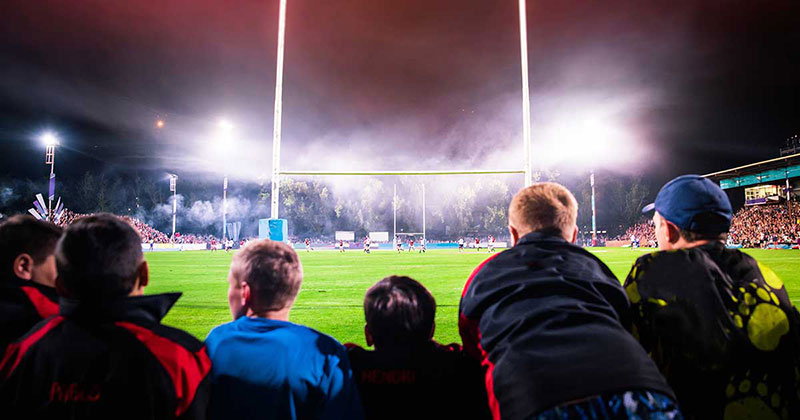
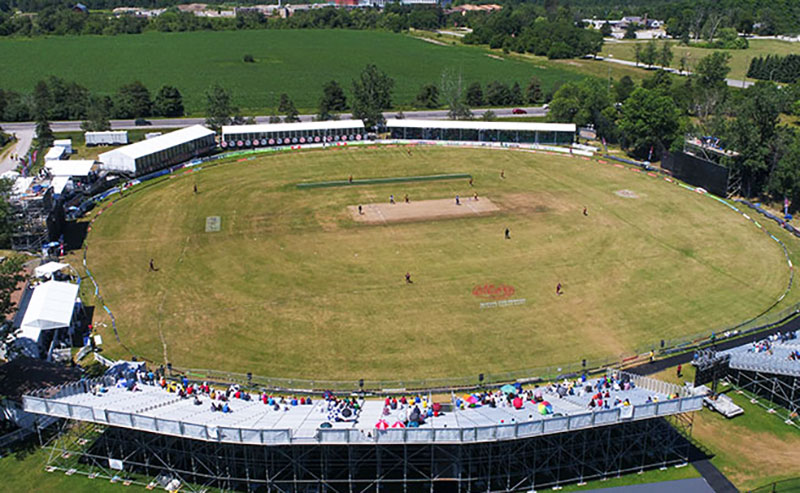
Until now, broadcast and streaming were reserved for Tier 1 sports that are backed by big advertising and ticket revenue. Tier 2 and Tier 3 sports, where affordability, reliability and responsiveness are critical factors, also need a way to be broadcast and streamed reliably – without the massive cost of broadcast fibre or satellite trucks.
The IDN is becoming very useful in this Tier 2 sports space. Niche sports and local teams that are trying to attract a regular fan base are finding the IDN’s image quality and consistency give them an edge at a good price.
Broadcast environments for Tier 1 sports events – even when fibre-based – always need redundancy by putting a backup system in place. Telstra is successfully using their IDN for this purpose. It is proving to be very reliable, cost-effective cloud-based transport for contribution and last-mile delivery, able to support newer protocols such as SRT (TBS is a member of the SRT Alliance) and RIST. www.telstra.com.au